Design Director – Case Studies
Dear Spherical,
The following are select projects and writings that focus on mapping place, engaging complex community issues, and responsible leveraging of technology. My portfolio in its entirety can be found at drzzl.com
Ways of Knowing
An immersive film (virtual reality and fulldome) where Navajo traditional culture and ecological knowledge reclaim and retell the nuclear legacy of the Southwest. It is an invitation to experience and learn the land — to unsee state borders, land claims, and uranium mines, and instead acknowledge the sacredness of the landscape and its capacity to heal under the loving stewardship of Indigenous elders, scholars and activists.
Primary role: Impact Producer
Led production team through due diligence process throughout development of the film, with special care to Indigenous protocol, trust-building, and navigating post-production through the sensitivities of Covid's impact on Navajoland.
Developed Impact Plan by leading team through goal-setting exercises and outlining desired impact. Raised $65,000 in grants.
Coordinated premiere at SXSW, organized tours in Navajoland (Arizona and New Mexico) and Japan (Hiroshima, Nagasaki & Tokyo), retrofitting each screening and discussion program around local audience's experience with nuclear history.
Additional roles: VR and fulldome format editing; sound design; graphic design and web development
Key Ethical Technological Consideration
We began filming Ways of Knowing as a 360 film in 2017 when the VR landscape was very different. Throughout our community feedback screenings (2018-19) we noted that audiences from Native communities, particularly those in the reservations, were severely unaccustomed to VR headsets, and many were unable to complete the film. By the time we completed the film in 2025, we hit an ethical impasse as Meta had become the dominant company behind VR, but had also begun heavily investing in nuclear energy to power its AI. We pivoted by reformatting to a more accessible ultrawide format, and partnered with the Institute of American Indian Arts to develop and debute a fulldome version – allowing for communal viewings with less technological friction.
Sightlines Atlas
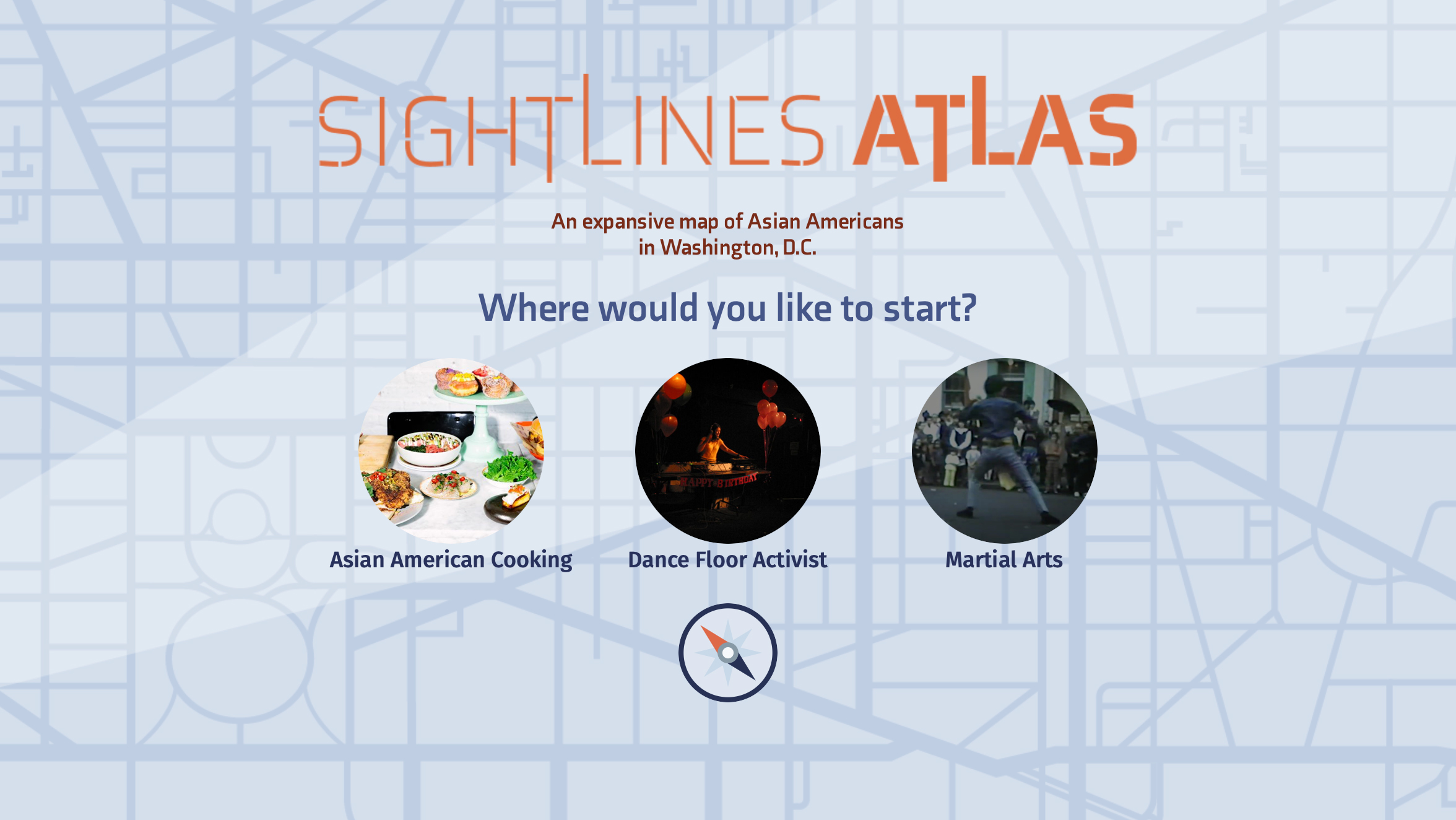
An online archive and educational resource that maps various stories to reveal the multi-faceted histories of Asian Americans over the past 70 years in Washington, D.C. A companion to the Smithsonian American Art Museum exhibition Sightlines: Chinatown and Beyond, the Atlas uplifts a community that is often overlooked by honing in on creative mediums that are rarely recognized in art museum contexts, including martial arts, murals, culinary arts, and grassroots community organizing. As opposed to mapping D.C. based on geography or time, the Atlas is presented as a series of stories that weave in and out of each other, showing how communities are distinct but intertwined.
Primary role: Creative Director & Researcher
Led team consisting of Smithsonian colleagues, exhibition design contractors, and web design contractors to develop UX, look and feel, and informational scaffolding.
Curated roster of community participants as lead investigators of each Atlas chapter, discussing themes and arriving at formats and elements customized for each individual story. Conducted interviews, reviewed media assets, edited content, and performed research for completion of each chapter.
Edited and transcribed oral testimonies, produced video assets from archival materials, and curated images.
Produced public programs based on Atlas chapters, further expanding the exhibition and Atlas' narratives through community gatherings.
Additional roles: Co-curated Sightlines museum exhibition; engaged with community stakeholders for content development and review; produced and installed ephemera in-gallery.
Key Ethical Technological Consideration
Museums are notorious for developing companion websites for exhibitions that end up being "data dumps" for material that was edited out of the exhibition. The resulting sites are often dense with information presented as inaccessible to casual audiences. Recognizing that the Sightlines exhibition would only be on view for a year while the Atlas would remain online in perpetuity, as Creative Director I aimed to present a module that was as carefully curated as the exhibition, while serving to expand the Sightlines universe. The resulting platform is one where visitors are immediately greeted with a shortlist of stories that unfold in their own unique ways. One chapter may allow visitors to dive deep into recorded testimonies while another chapter serves as a handy restaurant guide. We refrained from incorporating distracting "bells and whistles" often featured in interactive mapping projects, allowing for the innovation to be found within the stories themselves.
Smithsonian Culture Labs
The Smithsonian Culture Labs is a series of art and culture activations that disrupted museum norms by centering curatorial practice on ethical community engagement, balanced collaboration, and responsible stewardship of knowledge and environment. The Smithsonian Asian Pacific American Center presented four Culture Labs from 2016-2019 in Washington, D.C., New York City, Honolulu, and Auckland – each investigating complex social issues specific to the timing and location of the happening. Artists, scholars, and culture bearers greeted visitors in the spirit of knowledge exchange and co-creation – acting as a counter-model to the top-down approach traditional to museums.
Primary role: Curator
Led production of four Culture Labs, each consisting of 30-50 artists, scholars, and cultural practitioners, drawing 10-15,000 visitors over the course of each Culture Lab weekend.
- CrossLines: A Culture Lab on Intersectionality (Washington, D.C., May 2016)
- CTRL+ALT: A Culture Lab on Imagined Futures (New York City, November 2016
- ʻAe Kai: A Culture Lab on Convergence (Honolulu, July 2017)
- Te Whāinga: A Culture Lab on Civility (Auckland, October 2019)
Curated lineups and cultivated relationships with over 250 participants. Played curatorial role in development of over 100 original works of art, publications, and media.
Produced pre-event participant convenings: months prior to each Culture Lab, participants made a collective site visit to understand the deep histories and pertinent issues important to locals. Convenings were key to Culture Labs as they established trust and collaboration, establishing an interconnectedness absent in conventional group art exhibitions.
Established code of ethics, including fair wages, local and Indigenous representation, and free expression. Co-authored the Culture Lab Manifesto.
Key Ethical Technological Consideration
The Culture Labs emerged as I was determining the shape of my role as the Smithsonian's first curator focused on digital culture and humanities. Within the institution and the field, the expectation was for my projects to exist largely online and utilizing high technology. Instead, I became passionate about how the internet informs our lived experiences, especially in tactile space. Culture Labs embodied this relationship by adopting a peer-to-peer framework for knowledge exchange; addressing social and identity issues propelled by online discourse; and honoring that innovation exists in many forms, ranging from hi-tech inventions to traditional mainstays. For critics who expected my projects to fixate on screens and pixels, the challenge I accepted was to demonstrate how the digital and physical divide is an imaginary binary, one that unlocks possibilities once dissolved.
Additional Projects: Mapping
The Bay Area is a rich landscape where activism, culture, and technology collides. Growing up there cultivated in me a deep reverence for how a local community can make a profound global impact. Throughout my creative career, I've been passionate about intimately learning about local communities by meeting their artists and leaders, and exchanging ideas for how highlighting their unique traits can contribute to a more enriched world. Here are some more hyper-local projects I have been honored to be a part of.
Minneapolis:
McKnight Artist Exchange
From 2023 to 2025, I was invited by the Minneapolis College of Art & Design to serve as a mentor for the McKnight Visual Artist Fellowship. Through periodic visits to the Twin Cities, I had the opportunity to meet the area's emerging and mid-career artists, learn about how their practices are influenced by the histories and concerns around them, and offer insight for elevating their craft in service of their communities. This video is a capstone discussion I moderated with three of the fellows (Kaamil A. Haider, Keren Kroul & Mark Ostapchuk) that was held at the Minneapolis Institute of Art in 2025.
Singapore:
2219: Futures Imagined
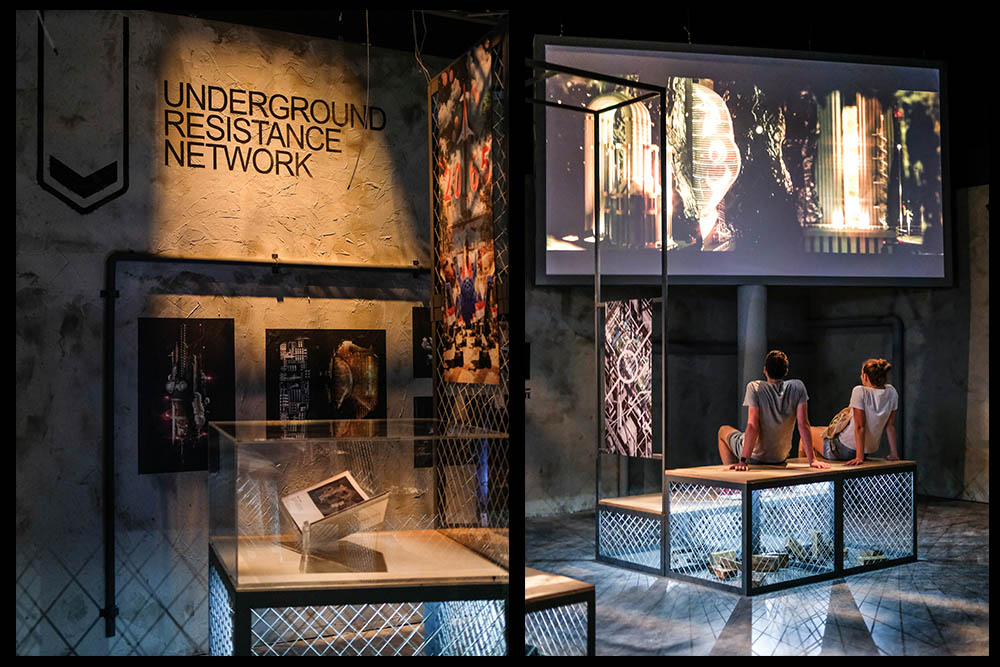
In 2018, the curator Annie Jael Kwan invited me to join her as a curatorial advisor for the Singapore ArtScience Museum's exhibition, 2219: Futures Imagined. Marking the 200th anniversary of the arrival of Sir Stamford Raffles the subsequent period of colonization, the 2019 exhibition was a experimental for the museum for its focus on local communities, decolonial discourse, and the melding of research and creativity. Through periodic trips, we met with artists and museum administrators, developing a framework for an ambitious exhibition that reflected on the nation's complex history while imagining what could be in store two centuries ahead.
Houston:
Memory Transplant
In 2020, the Houston arts non-profit DiverseWorks and Asia Society Texas invited me to feature in their annual Diverse Discourse lecture. The plan was for me to tour the city through a series of artist studio visits, and share about my work curating within local communities. When the pandemic hit, prohibiting travel, we decided to try an experiment: rather than a physical trip, I did a deep-dive into Houston's history and present through research, video calls with artists, and reflection on how the area's cultural legacy influenced my own upbringing from afar. We posed the question: Can someone know a place without stepping foot there? The result became a highlight of my period of lockdown, and when I finally went to Houston a couple years later to meet the artists in person, it felt like sort of a homecoming.
New Orleans:
Culture Lab Cooperative
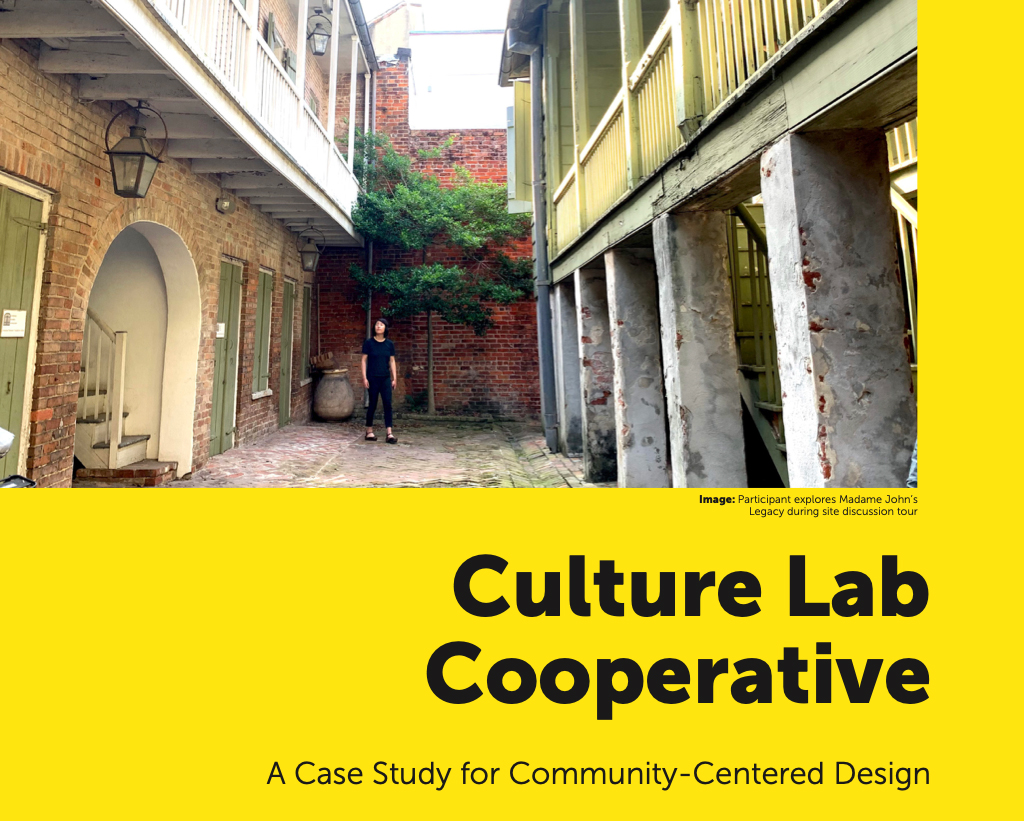
Following the success of the first three Smithsonian Culture Labs, in 2018 my team collaborated with the New Orleans-based equity design firm Shift Collective to develop a framework to share strategies and learning outcomes that could be infused in museums practices across the field. Taking advantage of the American Alliance of Museums Conference happening in the city that year, we organized a pre-gathering of social practitioners from museums across the country for a 2-day intensive where we mirrored the research, community-building, and ideation that lays the foundations for successful site-specific arts activations.
Adriel Luis is an artist, writer, and cultural strategist who believes that collective liberation can happen in poetic ways. His life’s work is focused on the mutual thriving of artistic integrity and social vigilance. He is a part of the iLL-Literacy arts collective, which creates music and media to strengthen Black and Asian coalitions, and is creative director of Bombshelltoe, a collaborative of artists and leaders from frontline communities responding to nuclear histories. Adriel is the Curator of Digital and Emerging Practice at the Smithsonian Asian Pacific American Center, where he focuses on the role of technology and the internet in shaping society and identity. His ancestors are rooted in Toisan, China, and migrated through Hong Kong, Mexico, and the United States. Adriel was born on Ohlone land.